Therapy for High-Functioning Adults • Ages 20–40 • Toronto & Ontario
You Look Like You Have Everything Together
But inside, you feel disconnected, drained, and exhausted from keeping up the image.
If you're high-functioning on the outside but struggling with quiet shame, difficulty expressing your needs, or emotional disconnection on the inside—you're not alone. I help adults heal the patterns beneath the surface through depth work, not quick fixes.
Many of My Clients Tell Me…
Many of the people I work with say things like:
• "Nothing terrible happened in my childhood… but something still feels wrong."
• "I'm successful but constantly feel like I'm not enough."
• "Small things trigger huge emotional reactions."
• "I struggle to explain what I'm feeling."
• "I want connection but something shuts down inside me."
Covered by insurance • Virtual sessions available across Ontario
You Might Be My Client If...
You're thoughtful, self-aware, and on the outside, your life looks good. You have a stable job, maintain friendships, maybe even a partner. But inside, something feels off.
- You look successful on the outside but feel empty or disconnected inside
- Small things trigger really big emotional reactions
- You struggle to understand your own needs or articulate what you're feeling
- There's a consistent feeling of "not having enough" — never quite satisfied
- You're exhausted from keeping up the image that everything's fine
- You crave deep connection but struggle to feel safe with vulnerability
- You're always there for others but struggle to ask for what you need
- You appear independent but deeply want to be seen and understood
"You may be carrying a quiet, embodied shame — a heaviness that others can't see."
Why Do You Feel This Way?
Childhood Emotional Neglect: The Invisible Wound
You might not have memories of "bad things" happening in your childhood. Your family may have been stable, even loving. But something was missing.
Childhood emotional neglect isn't about what happened—it's about what didn't happen. When your emotions weren't validated, when your needs weren't attuned to, when there wasn't space to express what you really wanted or felt—you learned to adapt.
You learned really well how to respond to other people's needs as a way to feel connected and accepted. You became skilled at picking up on what others wanted—sometimes at the expense of knowing what you wanted.
Over time, this pattern becomes exhausting. You're constantly there for others, but asking for things yourself feels impossible. You might feel guilty even thinking about your own needs.
"You learned to survive by adapting to others. Now, in adulthood, it's hard to recognize your own needs in relationships."
The Weight You Carry That No One Can See
Understanding Quiet, Embodied Shame
Shame isn't the same as guilt. Guilt says, "I did something bad." Shame says, "I am bad."
When your emotions were consistently met with judgment, criticism, or simply weren't seen or heard, you learned to bury them. You learned that expressing yourself led to disconnection.
In adulthood, this shows up as difficulty connecting to others, difficulty being vulnerable, and suppressed feelings that sit heavy in your body. You might carry beliefs like:
"I'm not worthy of being listened to"
"Maybe I'm not worthy of someone really caring about what I feel"
"If I show these parts of myself, people will leave"
"Something is fundamentally wrong with me"
These beliefs feel true because the experiences that created them were real. But they don't have to define you forever.
You Want Connection But Can't Feel Safe
Attachment Wounds & Relationships
The desire for connection is strong. You want closeness. You want to feel safe with your partner, friends, or family. But something gets in the way.
Maybe you shut down when conflict arises. Maybe you struggle to express what you need, even when your partner asks. Maybe you feel walls go up automatically, even with people you trust.
Early experiences taught you that being open and expressive—showing your honest feelings—was scary. It led to disconnection, criticism, or simply not being heard. So you learned to keep it inside. Now, in relationships, you might:
- • Struggle to ask for what you need
- • Feel disconnected from your partner even when they're trying to connect
- • Experience fear of abandonment when there's any disagreement
- • Go from 0 to 100 emotionally when triggered
- • Feel like you're always giving but never receiving
"Your emotions weren't bad or wrong. But expressing them didn't feel safe. Now, trusting others with your vulnerability feels impossible."
Complex PTSD: Not One Event, But An Environment
You might have heard of PTSD—Post-Traumatic Stress Disorder—typically associated with a single traumatic event like a car accident, assault, or natural disaster.
Complex PTSD (CPTSD) is different.
CPTSD occurs when trauma wasn't a single event, but an environment you grew up in. Repeated instances of not feeling seen, heard, understood, or cared for. An environment where you struggled to feel safe expressing yourself.
Your brain developed a baseline of surviving rather than being able to attune to your needs and experiences. You became hypervigilant to others' emotions while disconnecting from your own.
CPTSD in Adulthood Often Shows Up As:
Emotional Dysregulation
Small things trigger big reactions; difficulty calming down
Relationship Chaos
Fear of abandonment; difficulty trusting others
Disconnection
Feeling dissociated from yourself and your life
Never Enough
Constant feeling of not doing enough, not being enough
Difficulty Expressing Needs
Hard to articulate what you're feeling or what you need
Craving Closeness
Wanting connection but never quite feeling satisfied
Depth Work, Not Quick Fixes
You've probably tried therapy before. Maybe CBT, mindfulness apps, breathing exercises. Tools and coping strategies. And while these can be helpful, you're still here—still feeling stuck.
Some wounds need more than surface solutions. Some patterns run too deep for quick fixes.
In my work, we engage in depth work. That means we spend time uncovering the beliefs, thoughts, and feelings beneath the surface. We don't just manage symptoms—we understand where they come from and create lasting change.
My Approach Uses:
Emotionally Focused Therapy (EFT)
Understanding and processing emotions in relationships
Internal Family Systems (IFS)
Working with different parts of yourself with curiosity
Psychodynamic Therapy
Exploring unconscious patterns from early experiences
This isn't about immediate relief or temporary fixes. It's about creating sustainable, long-term impact: self-awareness, self-understanding, and compassion for yourself.
"We create a space that feels steady, compassionate, and deep—where you can gently explore what's beneath the surface."
What Therapy With Me Looks Like
Your First Session
Starting therapy—especially trauma therapy—can feel uncomfortable. It can feel awkward to sit down and talk about experiences and feelings that you've kept buried.
It's very normal to not even trust yourself in the process. That's okay. We'll go at a pace that feels right for you.
The most important thing is that you feel safe. Together, we'll create an environment where you're able to explore these difficult memories and feelings with more ease.
What Our Work Together Involves:
Looking for Support Sooner?
If Vanessa's availability does not align with your schedule, we also have therapists on our team who support clients navigating trauma, emotional overwhelm, anxiety, attachment wounds, and healing from difficult past experiences.
Meaningful Small Shifts Over Time
Progress in depth work isn't always dramatic breakthroughs. It's not a before-and-after transformation montage.
Progress is subtle. It's the accumulation of small shifts that, over time, change everything.
You Might Notice:
- More awareness of the patterns showing up for you
- Slowly creating different ways of responding to triggers
- Feeling more connected to others as you increase your vulnerability
- Expressing your needs in relationships with more confidence
- Responding to triggers with curiosity rather than immediate shutdown
- Less reactivity; more space between stimulus and response
- Developing an internal sense of worth (not just external validation)
- Feeling more present in your life, less dissociated
"You'll learn to understand your agency over patterns and dynamics—and create deeper connection with yourself and others."

About Vanessa Liu, RP (Qualifying)
Hi, I'm Vanessa. I'm a Registered Psychotherapist (Qualifying) practicing in Ontario.
I work with high-functioning adults in their 20s, 30s, and early 40s who look like they have everything together on the outside, but inside are carrying a quiet heaviness they can't quite name.
My clients are thoughtful and self-aware. They've often tried therapy before—CBT, mindfulness, coping strategies—but still feel stuck. They're looking for something deeper.
What draws me to this work:
I believe in the power of depth work—not just managing symptoms, but understanding where they come from. I bring care and curiosity to exploring the patterns beneath the surface.
In our sessions, I create a space that feels steady, compassionate, and deep. A space where you can gently explore what's beneath without judgment. Where you can finally express thoughts and feelings you've kept buried and feel truly heard and understood.
A bit about me:
When I'm not in session, I love finding cozy coffee shops or quiet corners in the city to slow down and people-watch. There's something about observing the world that grounds me—and I bring that same presence and attentiveness to my work with clients.
Credentials
- • Registered Psychotherapist (Qualifying) — CRPO
- • Specializations: CPTSD, Attachment, EFT, IFS, Psychodynamic Therapy
You May Also Connect With
Every healing journey is different. If Vanessa's availability is limited, Hayley also provides compassionate trauma-informed support for clients navigating anxiety, emotional overwhelm, difficult life experiences, and healing from past wounds.
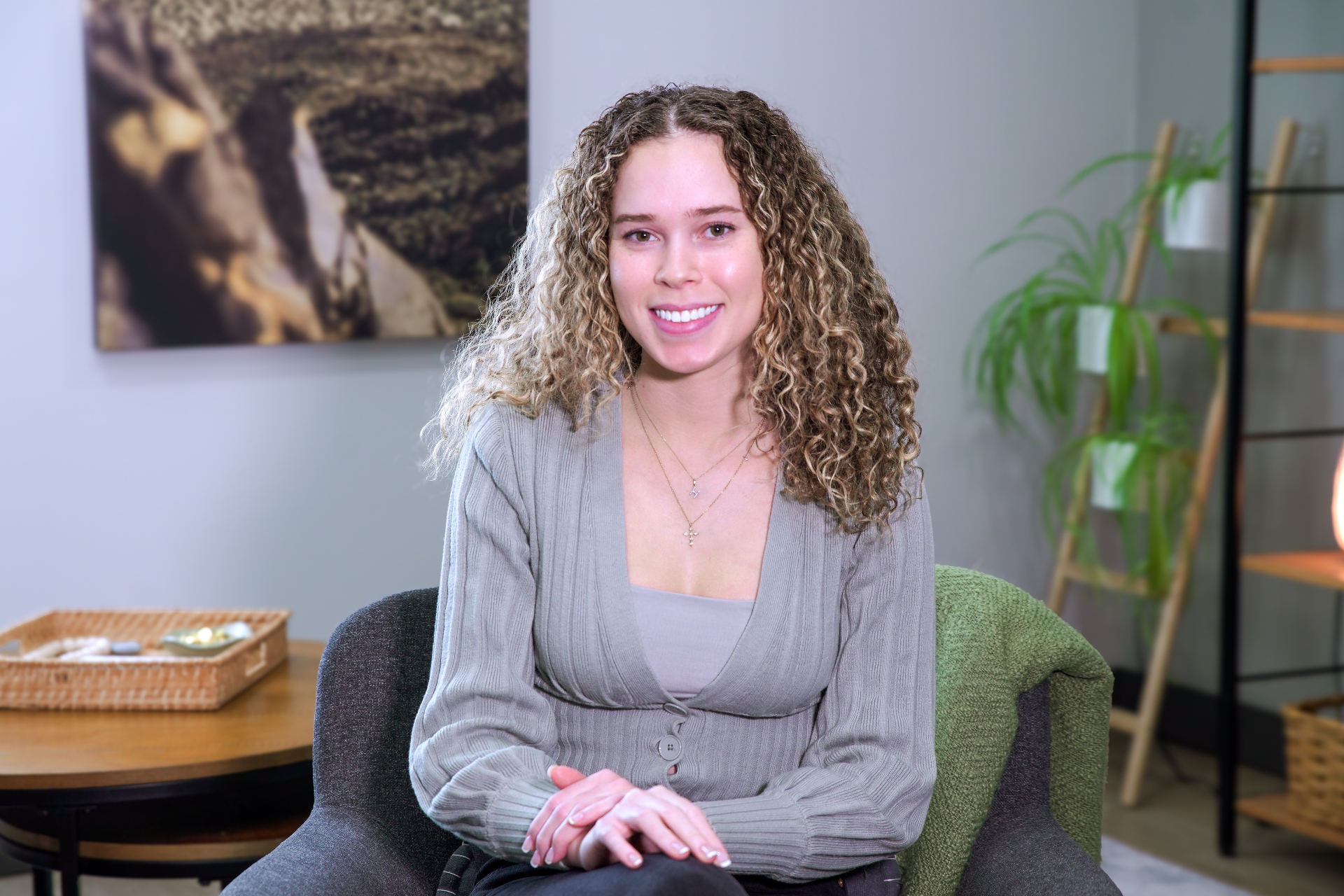
Hayley
Registered Psychotherapist
Warm, emotionally grounded support for individuals navigating anxiety, emotional overwhelm, relationship struggles, self-worth challenges, and the lingering impact of difficult life experiences. Hayley creates a compassionate space where clients can slow down, feel understood, and begin reconnecting with themselves safely and at their own pace.
Frequently Asked Questions
What Happens After You Book
Starting therapy can feel like a big step — especially if you're used to handling things on your own.
Here's what the process looks like.
Book a Free 15-Minute Consultation
You'll choose a time that works for you to connect briefly and see if this feels like the right fit.
There's no pressure or commitment — just a conversation.
Your First Therapy Session
If we decide to work together, your first session focuses on understanding your experiences, patterns, and what you're hoping to change.
We'll move at a pace that feels comfortable for you.
Begin Depth Work
Over time we explore the patterns beneath the surface — helping you reconnect with yourself, understand your emotions, and create more meaningful relationships.
Progress happens through small shifts that accumulate over time.
If This Resonates, You Don't Have To Carry This Alone
If you're feeling a heaviness that others can't see, we can create a space where you're able to express your thoughts and feelings freely—and finally feel heard and understood.
We'll uncover the dynamics and beliefs that have been shaping your life, so you can find ways to respond and adapt in a more meaningful, connected way.
info@kyaatherapy.ca
Virtual across Ontario